 ND
ND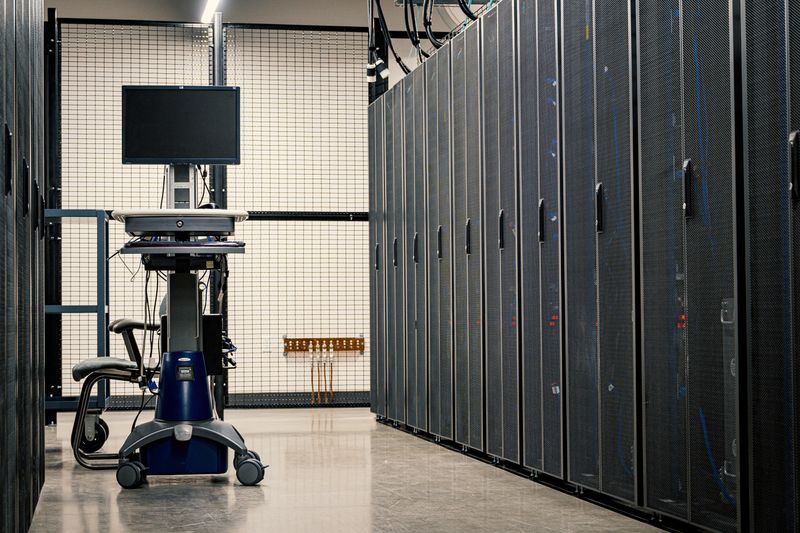
Australia's biggest planned float in decades has been called off. Firmus, an AI data centre operator backed by Nvidia, withdrew its planned ASX listing on Friday 9 October, just a day after closing its books to investors. The float would have been the largest on the Australian share market since Telstra in 1997, the ABC reported.
The decision matters beyond Australia. Most of Firmus's planned growth is in South-East Asia, including an OpenAI-anchored project in Malaysia and a large campus in Batam, Indonesia. The deal was an early test of how much markets will pay for the region's AI infrastructure.
What happened
Firmus had set an offer price of A$11 per share. According to Reuters, that implied an equity valuation of US$30.6 billion, nearly triple the US$10.5 billion valuation from a private funding round in early August. The ABC said the founders targeted a A$44 billion valuation, and UniSuper's John Pearce told the ABC the raise would be about A$7 billion. Reuters described the deal as a US$5 billion IPO. Trading had been due to start on 23 October.
As demand faded, the ABC noted reports that Firmus and its advisers were considering a smaller offer and cutting the price from A$11 to A$8.25 per share. Instead, the company dropped the listing. Its board said in a statement, reported by Business News Australia, that "having considered recent market volatility and prevailing market conditions", it had "concluded that proceeding with the offer was not in the best interests of the company".
In a letter to shareholders quoted by Reuters, co-founders Oliver Curtis and Tim Rosenfield wrote: "The company will now pursue capital from private markets and consider alternative international public market options." Reuters also reported, citing an unnamed person involved in the deal, that a Nasdaq listing could follow a private round. Firmus declined to comment on that.
Who is Firmus?
Firmus was founded in 2019 and started in crypto mining and high-performance computing before moving into AI infrastructure, according to Business News Australia. It now builds what it calls "AI factories": data centres packed with Nvidia chips that it rents out to AI companies.
In a company release on 8 September, Firmus said it had more than 900 megawatts (MW) of contracted capacity. It listed seven AI factories across Australia, Singapore, Indonesia and Malaysia. Two are operating, in Australia and Singapore, and five are under development with a target of being ready within 24 months. Its backers include Nvidia, Coatue, Blackstone and Jane Street, Reuters reported. The ABC said Nvidia holds a 7.2 per cent stake.
Why investors balked
Reports point to five main concerns.
| Concern | What was reported |
|---|---|
| Valuation jump | Reuters Breakingviews said the A$44 billion valuation was three times the August round and 23 times the company's value a year earlier, as reported by TNGlobal. |
| Debt | Firmus expects about US$30 billion of debt once its data centres are built, roughly six times the US$5 billion of operating earnings it forecasts for 2028, Morningstar noted, per the ABC. |
| Losses and disclosure | A draft prospectus projected a pro forma after-tax loss of 77 million dollars for the first half of the financial year ending 30 June 2027 (currency not specified), Reuters reported, citing two sources, in September. |
| Insider selling | About half the offer was to go to existing investors, Reuters reported. Escrow terms would also have let existing holders sell more than half their stock from day one, according to Reuters. |
| Build-out gap | Firmus and CDC Data Centres ended their 1.6-gigawatt "Project Southgate" partnership with only 42MW deployed, Data Centre Dynamics reported, citing the Australian Financial Review. |
According to Reuters, investors started pulling orders on Wednesday after CDC chief executive Greg Boorer told the Australian podcast Rampart that the plan to develop 1.6 gigawatts of AI factories with Firmus was no longer underway. Firmus co-CEO Oliver Curtis said in a statement to W.Media, quoted by DCD, that "Firmus and CDC mutually agreed earlier this year not to proceed", adding that the decision did not affect Firmus's development plans or contracted customer capacity.
Timing did not help. US-listed chipmakers fell 3.4 per cent on Thursday after a Financial Times report that OpenAI's annualised revenue was US$20 billion lower than previously signalled, Reuters noted.
What investors said
UniSuper chief investment officer John Pearce told the ABC: "We think that Firmus indeed has a compelling story. It just doesn't have a compelling valuation."
Jun Bei Liu, co-founder of fund manager Ten Cap, told Reuters: "I think the Firmus situation represents an important reality check for the AI investment boom." Joseph Koh, a portfolio manager at Blackwattle Investment Partners who looked at the deal but did not bid, said: "They were asking for a very big price tag for what would likely be expected to happen in the future."
The ripple effect on the ASX
The clearest listed casualty is Maas Group, a Dubbo-based diversified industrial group whose subsidiary JLE Group is the exclusive supplier of power train units for Firmus's Australian AI factory pipeline. Maas paid a total of A$410 million for a 3.2 per cent stake in Firmus on a fully diluted basis, according to Business News Australia. Maas shares fell more than 20 per cent on Thursday and the company entered a trading halt on Friday, Reuters reported.
Why this matters for South-East Asia
Firmus's expansion is now as much a South-East Asian story as an Australian one. OpenAI signed on as an anchor customer for two AI factory sites in Malaysia. In Indonesia, Firmus plans a 360MW campus at DayOne's site in Batam housing a cluster of about 170,000 Nvidia GPUs, with deployment running through 2027 and 2028, DCD reported in June. Firmus estimates US$25–30 billion in committed offtake over the first six years, a company estimate rather than a confirmed contract value. TNW reported in September that the Batam site is due to go live in the first quarter of 2027.
Pulling the IPO does not cancel these projects or contracts, TNGlobal noted. But it removes the public-equity route Firmus planned for its capital-hungry next phase. For Malaysia and Indonesia, the question is whether private funding arrives fast enough to keep the timelines. For more on the region's build-out, see our explainer on how many data centres South-East Asia has.
Energy is another pressure point. Accela Research said Firmus's three planned Tasmanian sites would need about 444MW, making it the state's largest energy user, the ABC reported. Accela's lead data centre analyst, Naomi Wagura, said: "This infrastructure investment needs binding customer commitments and realistic demand forecasts."
What to watch
- Private round: Firmus has not said how much it will seek, from whom, or when.
- A US listing: a possible Nasdaq listing after the private round.
- Delivery dates: Whether the Batam campus goes live in early 2027 as reported, and whether the five sites under development, including those in Malaysia, meet Firmus's 24-month ready-for-service target.
- AI listings in the region: Whether other AI infrastructure floats get repriced. See our ASEAN stock markets outlook.
Key numbers
- A$11: planned offer price per share; A$8.25 was reportedly considered
- About A$44 billion (ABC) / US$30.6 billion (Reuters): target equity valuation
- About A$7 billion (UniSuper's John Pearce, via ABC) / about US$5 billion (Reuters): planned raise
- US$10.5 billion: valuation in the August private round (Reuters)
- About US$30 billion: debt Firmus expects once data centres are built (Morningstar, via ABC)
- 900MW+: contracted capacity claimed by Firmus
- 2 of 7: AI factories currently operating
- 360MW: planned Batam, Indonesia campus
This is general information, not financial advice.
This article was researched with AI assistance and reviewed by the NDNews editorial team. It is based on official data and media reports as of 10 October 2026. It is not financial advice.