 ND
ND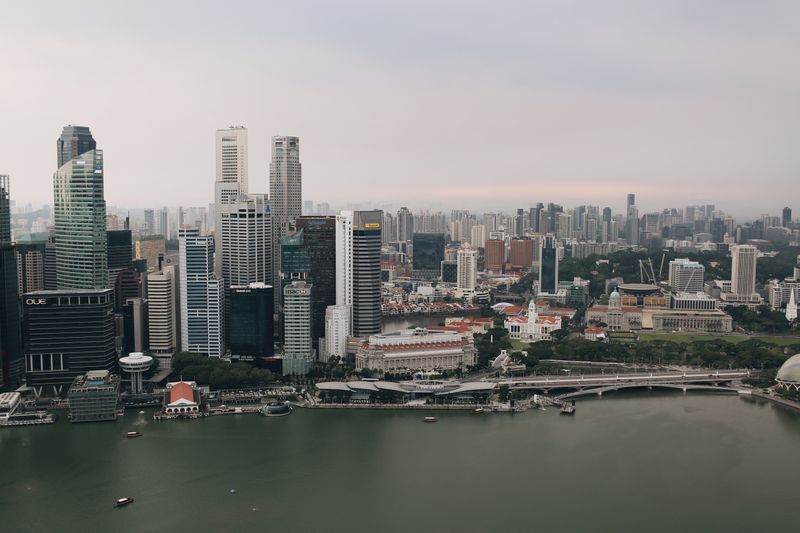
Haze has returned to Singapore just days before the city hosts the Formula 1 Singapore Grand Prix. Smoke from fires in southern Sumatra pushed air quality back into the Unhealthy range over the weekend, and "Singapore haze" was among the most-searched terms in the city-state on Tuesday, with more than 5,000 searches according to Google Trends data viewed by NDNews.
Here is what the readings show, what the authorities advise and what to expect in the coming weeks.
The latest readings
The National Environment Agency (NEA) said in its update at 7pm on Monday, 5 October, that the 24-hour Pollutant Standards Index (PSI) was between 97 and 124, in the Moderate to Unhealthy range. The one-hour PM2.5 concentration, which measures fine particles, was 72–109 µg/m³, in Band 2 (Elevated), according to NEA.
"Moderate to dense smoke plumes from southern Sumatra were observed to drift towards Singapore," NEA said. It forecast air quality for the following day in the high Moderate to mid Unhealthy range, with winds blowing from the southeast or east-southeast.
Conditions had already worsened earlier in the weekend. On 4 October the 24-hour PSI was 73–96, NEA reported, and by late morning on 3 October the reading in the central region had reached 102, according to The Star, citing The Straits Times.
| PSI range | Air quality descriptor |
|---|---|
| 0–50 | Good |
| 51–100 | Moderate |
| 101–200 | Unhealthy |
| 201–300 | Very unhealthy |
| Above 300 | Hazardous |
Readings change through the day. Readers should check the latest figures on NEA's haze website or the myENV app.
The worst haze season in years
This is not a one-off episode. The 24-hour PSI first entered the Unhealthy range this season on 4 September, the first time since October 2023, according to NEA. The highest reading so far this year was a PSI of 167 in the central region on 29 September, The Star reported, citing The Straits Times.
The cause is land and forest fires in Indonesia, mainly in southern Sumatra, with NEA also noting smoke from Kalimantan in its 4 October update. A very strong El Niño, together with a developing positive Indian Ocean Dipole, has made the dry season longer and drier across the region. NDNews explained these weather drivers in our Asia-Pacific weather outlook.
What NEA advises
NEA's health advice depends on the readings. It recommends using the one-hour PM2.5 band to decide on immediate activities and the 24-hour PSI forecast to plan the next day.
When the PSI is in the Unhealthy range, NEA advises:
- Healthy people: reduce prolonged or strenuous outdoor physical exertion.
- Elderly people, pregnant women and children: minimise prolonged or strenuous outdoor exertion.
- People with chronic lung or heart disease: avoid prolonged or strenuous outdoor exertion.
N95 masks are not required for short exposure, such as commuting. NEA says a healthy person who has to be outdoors for several hours may wear one when the forecast air quality is Hazardous (PSI above 300). Vulnerable people are advised to avoid or minimise outdoor activity when the forecast is Very Unhealthy (PSI above 200), and may wear an N95 mask if they must be outdoors for several hours. The elderly, pregnant women and those with severe lung or heart conditions should ask their doctor whether to use one.
Anyone feeling unwell, especially those with existing heart or lung conditions, should see a doctor.
What the government has put in place
A Haze Task Force led by NEA and covering 28 government agencies has been activated, NEA said in September. Measures include:
- Air purifiers in every classroom in primary schools, secondary schools, junior colleges, Millennia Institute, Special Education schools and MOE kindergartens.
- Exam candidates sitting papers in enclosed spaces with air purifiers when air quality is Unhealthy.
- Air-conditioned rooms at community centres and clubs ready to open as respite areas if the PSI goes above 200.
Race week: what it means for the Grand Prix
The Formula 1 Singapore Grand Prix takes place at Marina Bay from 9 to 11 October. Organisers have said they have a haze plan developed with government agencies, including PSI monitoring and decisions made jointly with the authorities if conditions worsen, according to Grande Premio and Batam News Asia.
There is a precedent. In 2019 the race went ahead while the PSI was in the Unhealthy range: NEA's update on race day, 22 September 2019, put the 24-hour PSI at 109–121.
Spectators planning to attend should:
- Check NEA's PSI and PM2.5 readings before leaving home.
- Follow official advice from the organisers on any changes.
- Consider limiting time outdoors if they are elderly, pregnant, or have heart or lung conditions.
Road closures around the circuit run from Wednesday, 7 October, to early Tuesday, 13 October. Drivers should check the latest arrangements on the Land Transport Authority's OneMotoring site.
When will it clear?
Not soon, according to forecasters. The Meteorological Service Singapore expects below-average rainfall in the first half of October, with daily maximum temperatures of 34–35°C and possibly above 35°C on a few days, NEA said.
The change to monsoon conditions is expected in late October or early November for Singapore, later than in the previous two years, The Star reported, citing The Straits Times.
True relief could come only when monsoon rains reach Indonesia in late December or early January, said Koh Tieh Yong, a meteorologist and adjunct associate professor at the National University of Singapore. He said these rainfall events are expected to greatly help contain and put out the haze-inducing fires, as reported by The Star.
Assistant Professor Wang Jingyu of the National Institute of Education warned that a strong El Niño could bring a dry spell later in the monsoon. "So expect a brief improvement around December, followed by a return to warmer, drier and potentially hazy conditions in the latter half of the monsoon," he said, according to the same report.
A regional problem
The haze is not only Singapore's problem. Indonesia's South Sumatra province recorded 3,026 fire hotspots in 24 hours on 30 September, and air quality in its capital, Palembang, reached a level classed as hazardous, IDN Times reported. Fires on dry peat land are hard to put out once they start, which is why forecasters link relief to the arrival of heavy rain.
Key numbers
- 97–124: 24-hour PSI range on the evening of 5 October
- 167: highest PSI reading so far this year (central region, 29 September)
- 4 September: first Unhealthy reading of the season, the first since 2023
- 9–11 October: Singapore Grand Prix race weekend
- Late October–early November: expected start of monsoon conditions in Singapore
This article was researched with AI assistance and reviewed by the NDNews editorial team. It is based on NEA updates and media reports as of 6 October 2026. Air quality changes quickly; always check the latest official readings. This is general information, not medical advice.